Table of Content
After that, be sure you have a hand-held mirror as well as a mirror “big enough to see the back of your hair,” Massey says. Add good lighting and a plain wall “so that you can see the shape and silhouette of your hair” clearly. Thanks to all authors for creating a page that has been read 256,819 times. You can also use a hair razor to clean up your neckline. Use the back section of your hair as a guide as to how much to take off of the sides. To prepare this remedy, take one papaya, skin it and remove the seeds.
If you suffer from color-treated damage, you will not—and we cannot stress this enough—find a better damage control hair treatment than Olaplex Hair Perfector No. 3. It's a great technique, again, for those looking to maintain their length. "It only takes a little and what's necessary," says Stenson. Just part your dry hair into thin, layered sections and "skim" the blade downward toward your ends. You might even see some product buildup and frays accumulating on the blade—it's pretty satisfying; just make sure not to go too overboard.
Trending Articles
The best method to use will depend on the individual’s hair type and the desired results. Brushing and combing your hair too often can cause split ends. So, be gentle and only brush or comb your hair when necessary. Here, Massey shares her step-by-step guide for the safest and most effective way to trim coils, kinks, waves, and curls while at home. Now, cut just a half-inch to an inch at the ends, straight across, and then point cut vertically to give texture and eliminate bluntness.

It can, however, be quite difficult getting used to working with your mirror image. Depending on your hair type, a brush might work better to remove knots and tangles. There is no one definitive way to cut your hair ends by yourself.
How to Cut Split Ends
Our online classes and training programs allow you to learn from experts from anywhere in the world. Thanks to all authors for creating a page that has been read 1,815,960 times. A split end happens when the tip of the hair is damaged. The end will unravel like a frayed thread and then separate, creating the split.
The hair loss condition alopecia areata can be successfully managed with thyme oil. Antioxidants and flavonoids found in thyme prevent dandruff, itching, and scalp infections. Additionally, it maintains healthy hair and encourages hair growth. Apply a few drops of any carrier oil to your hair and scalp after combining them. It is a common staple in many households nowadays and is also known to have positive effects on your hair.
Using the Sliding Technique
If you have shorter hair that's more difficult to see, use a mirror when cutting off the split ends. It’s best if you start on one side of your head so that you don’t get the sections of hair mixed up as you go along. The amount of hair trimmed is up to you.Standing in front of a mirror helps when you are trimming your own hair.

Is TikTok's coveted hair potion worth using on your strands? Pay attention to the direction of your hair and your scissors. If you can hold off on cutting, invest in some reparative treatments. First, ask yourself if a haircut is actually necessary.
Invest in a Good Pair of Shears
This is a good idea if you want the pieces in the front to be longer than the back. Wiggle your razor back and forth slightly to shave off the ends of your hair. In (1.3 cm) longer than you want your hair to be in the end so that you can make finishing touches to clean up your ends. Do this for the back section of your hair first, and use a mirror to help you make straight cuts or ask a trustworthy friend or family member to help you with the back section. Finding a haircut, hairstyle or color can be difficult.
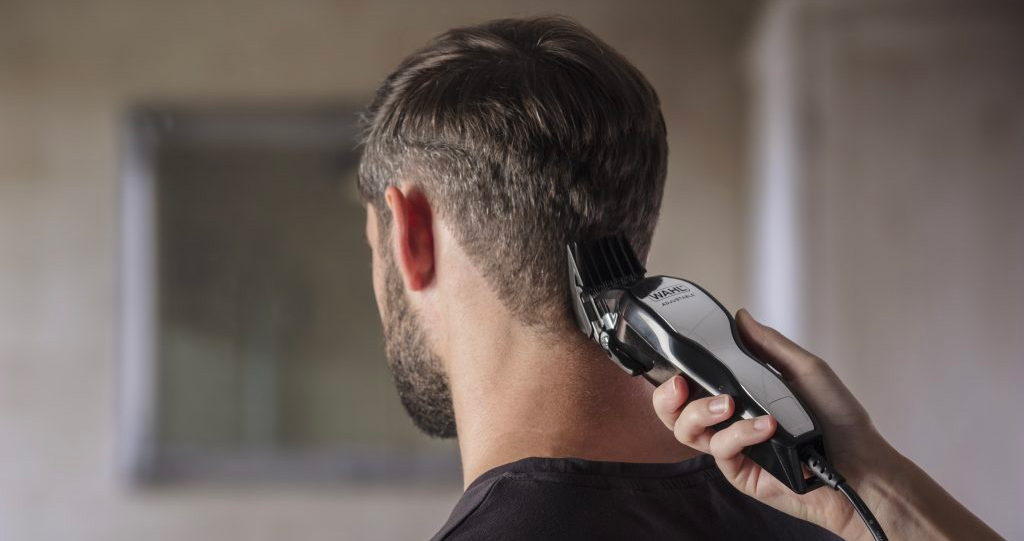
“Really take your time to observe the landscape of your hair, paying attention to all the different strands, their shapes, and how they each fall,” Massey recommends. Gather a new section of hair and repeat the twisting process. Take a 1 inch (2.5 cm) section of hair next to the old section, twisting it like you did the first.
According to Arrunategui and Los Angeles-based hairstylist Justine Marjan, split ends are an indicator that you're in need of a trim. Sway your head back and forth to allow your hair to settle into its natural position. Look carefully and plan out how much you want to trim. Before cutting, use a large mirror and a hand-held mirror to observe how hair naturally falls. So if that's the case, how do you ensure your at-home hair cutting experience doesn't end in regret? Put these expert-approved tips on how to cut hair at home into action.
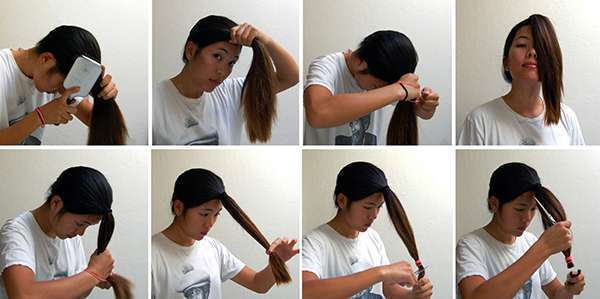
Pay special attention to YouTuber Pick Up Limes’s technique for point-cutting . Kamara Brown Lewis is a hairstylist at Raw Intuition salon in Los Angeles who specializes in protective hairstyles, faux locs, and curl cuts. Brown also has her own wig line that offers wigs, bundles, and clip-ins, from yaki textures to 3b/4c textures. But if you’re already about to scroll past my warnings and disclaimers and just do the dang thing yourself, then fine, I get it, and I’ve been there. A wide tooth comb is less likely to damage your hair and is great for detangling. It's especially important to use a wide tooth comb if you're brushing through wet hair, as wet hair is more likely to break and cause split ends.
However, once your hair dries, it may appear slightly shorter than when you cut it. Trim the left and right sections of your hair to match the back. Next, take out the clip or hair tie and comb your hair down. Follow the line of the back section and make a horizontal cut across the ends of both sides.
Not necessarily, but I definitely suggest having a second person there to assist you. Hair that is very thick, curly or coarse should be washed twice to make sure it is clean. Split ends can be treated by trimming them, while dead ends cannot. The best way to determine how often you need to clip your ends is to experiment.
"Use the comb as a guide for a straight line, then cut upwards with the scissors." But whatever you do, be patient and keep your cuts minimal. Otherwise, you might wind up cutting your bangs way shorter than you anticipated. Marjan recommends working in very small sections — just an inch or two wide when spread as thin as possible between your fingers — starting at the very front. "You can see where the hair will land, then use that piece as a guide for the rest of the hair," she says.

"Self-given cuts, when performed on dry hair, tend to be more accurate, as wet hair shortens when dry," he says. Getting a perfectly even DIY cut can be tricky, but this tried-and-true method for achieving layers at home is great for beginners. Smooth hair into a ponytail at the top of the hairline near the forehead (hence the "unicorn ponytail" method), pull hair forward and snip ends. The sharper the angle, the more drastic the face-framing layers will be. This haircut tutorial was pretty much made for you.


No comments:
Post a Comment